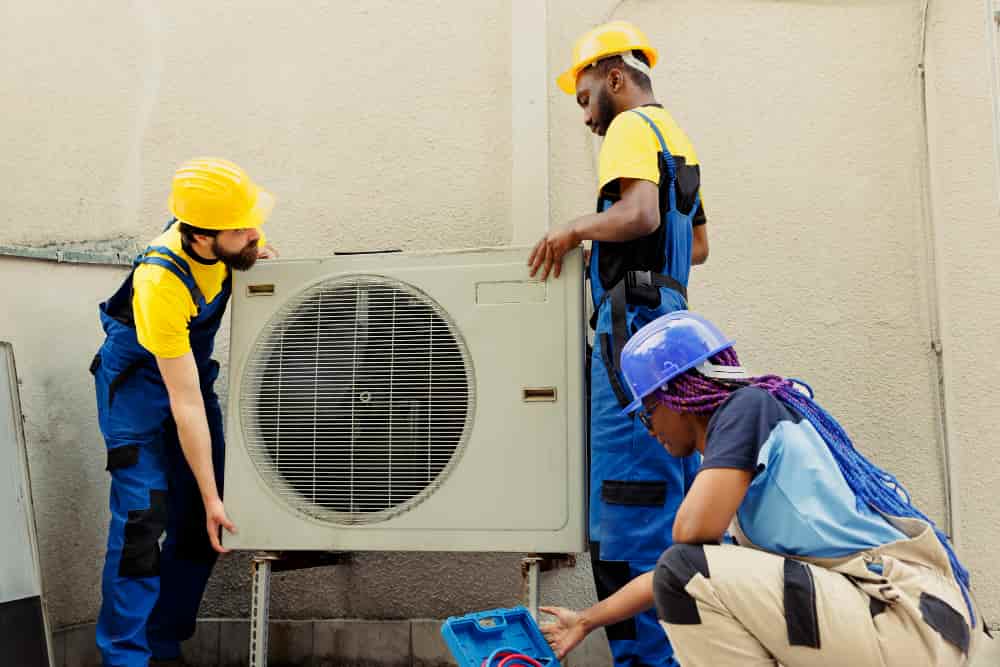
How to Start an HVAC Business in 2026 (Step-by-Step)

To start an HVAC business in the US, you need a state contractor’s license, EPA Section 608 certification, business registration, liability insurance, and enough startup capital to cover your first van and equipment — typically $25,000 to $80,000 depending on how you structure your launch. The HVAC services market is booming: the US HVAC services industry is projected to exceed $25 billion by 2030, driven by aging housing stock, extreme heat events, and surging demand for energy-efficient systems.
If you’re already working as a journeyman or master HVAC technician, you have the hardest part covered. Most HVAC business owners start as solo owner-operators and grow from there. This guide walks you through every step — from getting licensed to landing your first service calls.
Quick facts: Starting an HVAC business
- Minimum license required: EPA Section 608 certification + state HVAC contractor license
- Typical startup cost: $25,000–$80,000 (solo owner-operator)
- Time to first job: 30–90 days after licensing, depending on your state
- Average HVAC business owner income: $75,000–$150,000/yr (varies widely)
- HVAC industry growth: 8.1% job growth projected 2024–2034 (BLS)
- Market size: $25B+ US HVAC services market projected by 2030
Table of Contents
What it takes to own an HVAC business
Owning an HVAC business is fundamentally different from being a technician. You’re not just fixing systems — you’re quoting jobs, managing cash flow, scheduling service calls, ordering parts, and finding new customers while also doing the work. Most successful HVAC business owners spend their first two to three years doing all of this themselves before they can afford to hire help.
The good news: HVAC is one of the most recession-resistant service trades. People don’t stop needing heat in January or AC in July, regardless of the economy. Demand is also structural — the US has approximately 140 million housing units, most with aging mechanical systems. The average HVAC system lasts 15–20 years, which means there is a constant base of replacement and repair demand regardless of new construction activity.
The barrier to entry is real, though. You need hands-on experience before you start. Attempting to run HVAC calls without sufficient field experience will result in callbacks, warranty claims, and reputation damage that can kill a new business before it gains traction. Most HVAC business owners have at least 5–8 years of field experience before going independent.
Licensing and certifications required
EPA Section 608 Certification (Federal — Required Nationally)
This is the non-negotiable federal baseline. The Clean Air Act requires anyone who purchases, handles, or recovers refrigerants to hold EPA 608 certification. Without it, you cannot legally work on any system that contains refrigerants — which is essentially every residential and commercial HVAC unit.
There are four certification types under Section 608:
- Type I: Small appliances (window units, refrigerators)
- Type II: High-pressure systems (most residential AC systems)
- Type III: Low-pressure systems (large commercial chillers)
- Universal: All of the above — this is what you want
Universal certification is the standard for anyone running an HVAC business. You can take the exam through ESCO Institute, Mainstream Engineering, or NCI (National Comfort Institute). Exam cost: typically $20–$60. No renewal required once certified.
Important update: A2L refrigerant certification
R-410A has been phased out under EPA SNAP rules and replaced with A2L refrigerants (R-32, R-454B, R-410A blends). All new HVAC equipment manufactured after January 1, 2025 uses A2L refrigerants — meaning by 2026, A2L systems are already in the field in significant numbers. If you’re starting a business now, A2L safety training is not optional. ACCA and ESCO Institute both offer it, and most distributors require proof of training before selling A2L refrigerants.
State HVAC Contractor License
Beyond the federal EPA requirement, most US states require a separate HVAC contractor license to operate a business. Requirements vary significantly:
High-requirement states: California, Florida, Texas, North Carolina, and most of the Northeast require passing a state exam, proof of work experience (typically 4–6 years), a surety bond, and proof of insurance before issuing a contractor license.
License-by-registration states: Some states (like Colorado) require business registration and insurance but have lighter exam requirements for HVAC specifically.
No statewide HVAC license states: A handful of states leave licensing to municipalities — you may need city or county permits instead.
The safest move: go directly to your state’s contractor licensing board website and look up the current requirements for HVAC contractors. Do not rely on third-party summaries — licensing rules change.
Watch out
Operating an HVAC business without the required state contractor license is illegal in most states and can result in fines of $1,000–$10,000 per violation, project stop-work orders, and personal liability for any work performed. Some states treat unlicensed contracting as a misdemeanor or felony. Always verify your state’s current requirements before your first paid job.
Read our full HVAC licensing guide: HVAC Certification & Licensing You Need in 2026.
NATE Certification (Recommended, Not Always Required)
NATE (North American Technician Excellence) certification is the industry’s leading voluntary credential. It’s not legally required in most states, but it matters for three reasons: homeowners increasingly look for it, HVAC manufacturers sometimes require it for warranty work, and it differentiates your business from uncertified competitors.
NATE offers specialty certifications in air conditioning, heat pumps, gas heating, and more. Cost: $225–$425 per exam. If you’re building a residential service business, earning NATE certification before launch is worth the investment.
How to legally structure and register your business
Your business structure affects your taxes, personal liability, and how you can raise capital later. For most solo HVAC business owners starting out, the choice is between a sole proprietorship and a single-member LLC.
LLC (Recommended)
- Personal assets protected from business lawsuits
- Pass-through taxation (profits taxed on your personal return)
- More credible to commercial clients
- Easy to add partners or employees later
- Cost: $50–$500 to file, varies by state
Sole Proprietorship
- Simplest to set up — no formal filing required
- No separation between personal and business liability
- Fine for very early testing; risky once you’re doing real volume
- Harder to separate business credit history
- Cost: essentially free (just a DBA filing)
The standard recommendation for HVAC: Form an LLC from the start. The liability protection alone is worth it — one lawsuit from a customer alleging property damage or injury can wipe out personal savings if you’re operating as a sole proprietor. Filing an LLC costs $50–$500 depending on your state and takes about a week.
Registration steps after forming your LLC:
- Get an EIN (Employer Identification Number) from the IRS — free at irs.gov, takes 5 minutes online. You need this to open a business bank account and pay taxes.
- Open a dedicated business bank account — never mix personal and business finances. Chase, Bank of America, and most regional banks have small business checking accounts. Some online-only banks (Relay, Mercury) are popular with solo contractors.
- Register for state and local taxes — most states require a sales tax permit if you sell equipment. Some states also require registration with the state department of revenue. Check your state’s requirements.
- Apply for a business license in your city/county — separate from your contractor license, this is just a general business operating permit. Typically $25–$100/year.
- Get a surety bond — many states require a surety bond (typically $5,000–$25,000) as part of the contractor licensing process. This protects customers if you fail to complete contracted work. The annual premium is usually 1–3% of the bond amount.
Startup costs — what you’ll actually spend
This is the section most guides get wrong by either vastly underestimating costs or padding them to scare you off. Here’s a realistic breakdown for a solo owner-operator launching a residential service business in 2026.
| Item | Budget launch | Standard launch | Notes |
|---|---|---|---|
| Service van | $8,000–$15,000 (used) | $35,000–$55,000 (new) | A used cargo van in good condition is fine to start |
| Hand tools & meters | $2,000–$4,000 | $5,000–$10,000 | Manifold gauges, multimeter, recovery machine, leak detector |
| Refrigerant recovery machine | $400–$700 | $700–$1,500 | Required for A2L work; upgrade to A2L-rated model |
| Initial refrigerant & parts inventory | $1,500–$3,000 | $3,000–$6,000 | Filters, capacitors, contactors, common repair parts |
| Liability insurance (year 1) | $1,200–$2,000 | $2,000–$4,500 | General liability + commercial auto; required before any job |
| Licensing & bonding | $500–$1,500 | $1,500–$3,000 | Varies significantly by state |
| LLC formation & business registration | $100–$300 | $300–$600 | Filing fee + optional registered agent service |
| Website & Google Business Profile | $200–$500 (DIY) | $1,000–$3,000 (professional) | Google Business Profile is free and critical |
| Field service software (year 1) | $0–$600 | $600–$1,800 | Jobber, Housecall Pro, or ServiceTitan; solo plans start around $49/mo |
| Marketing & advertising (year 1) | $500–$2,000 | $3,000–$8,000 | Google Local Services Ads are the best ROI for new HVAC businesses |
| Working capital reserve | $3,000–$5,000 | $5,000–$10,000 | Cover slow months, unexpected repairs, parts before customer payment |
| Total estimated range | $17,400–$34,000 | $57,200–$103,400 |
Pro tip: The van is your biggest lever
Most new HVAC business owners overspend on a new van and underspend on marketing. A clean, mechanically sound 2018–2020 Ford Transit or Ram ProMaster with 80,000–100,000 miles will serve you just as well as a new vehicle for your first two years — at a third of the cost. Redirect that savings into Google advertising, where your first dollar generates real customers.
Step-by-step: How to start an HVAC business
Equipment and tools you need
You don’t need to stock a full warehouse on day one. A solo service technician launching a residential HVAC business needs a focused toolkit that covers the 80% of calls you’ll actually get — tune-ups, refrigerant work, capacitor and contactor replacements, thermostat installs, and basic system diagnostics.
-
1
Get licensed and certified EPA Section 608 Universal certification is mandatory and can be obtained in a weekend. Then pursue your state HVAC contractor license — the process takes 30–120 days depending on your state’s exam schedule. Do not skip the state license. You’ll also want to add NATE certification before launch if you don’t already have it. Budget $200–$600 for exams and application fees total. Use this time to research your state’s specific requirements at your contractor licensing board’s official website.
-
2
Form your LLC and register your business File your LLC with your state’s Secretary of State office — most states have an online portal and process it in 3–7 business days. Get your EIN from irs.gov immediately after. Open a business checking account (separate from personal — this is non-negotiable). Apply for a business credit card to track expenses and build business credit from day one. Total time: 1–2 weeks. Total cost: $100–$600 depending on your state’s filing fee.
-
3
Get insured — before your first job You need at least two insurance policies before you do a single paid job: (1) General liability insurance — minimum $1 million per occurrence, $2 million aggregate. This covers property damage and bodily injury claims. (2) Commercial auto insurance — your personal auto policy does not cover a vehicle used for business. Most insurers can bundle these. For HVAC contractors, expect $150–$375/month for a solo operator. Get quotes from Thimble, Hiscox, Coterie, or a local independent broker who specializes in contractor coverage.
-
4
Buy your van and stock your tools Your service van is your mobile shop. At minimum you need: a refrigerant recovery machine (A2L-rated — required for current equipment), manifold gauge set, digital multimeter, clamp meter, vacuum pump, leak detector, pipe cutter, drill, cordless tool set, and a core set of replacement parts (capacitors, contactors, filters, thermostat). Total tool investment for a well-equipped but not over-stocked service van: $3,000–$6,000. Add van shelving ($800–$1,500) to stay organized — you will save hours per week.
-
5
Set up your pricing and service agreements Decide how you’ll price before you answer your first call. The two most common models: flat-rate pricing (a fixed price per repair type, communicated upfront) and time-and-material (hourly labor + parts). Most residential HVAC businesses use flat-rate because it’s simpler for customers and easier to scale. Tune-up visits typically run $89–$149. Service call diagnostic fees: $65–$125. Capacitor replacement: $150–$300 flat rate. Set these before launch. Also create a standard service agreement template — this protects you if a customer disputes a charge.
-
6
Set up your online presence Three things matter most for a new HVAC business: (1) Google Business Profile — free, takes 30 minutes to set up, and is the #1 source of calls for most local HVAC businesses. Add photos, your service area, hours, and get your first 5 reviews from friends or former colleagues. (2) A simple website — at minimum, a homepage, services page, and contact form. WordPress or Squarespace works fine. Include your license number on your site. (3) Google Local Services Ads — these are the green “Google Guaranteed” ads at the top of search results. You pay per lead, not per click. For a new HVAC business, this is the fastest path to inbound calls.
-
7
Install field service software Do not try to run your business on spreadsheets and text messages. Field service management software handles scheduling, dispatching, customer records, invoicing, and payment collection — often in a single app. For solo operators starting out: Jobber ($49–$99/month) and Housecall Pro ($65–$169/month) are both solid. As you add employees, ServiceTitan becomes worth the higher cost. These tools pay for themselves by reducing missed appointments and getting invoices paid faster.
-
8
Book your first customers Your first 10–20 customers will come from your personal network and direct outreach — not from advertising. Text every person you know, let them know you launched, and ask if they know anyone who needs HVAC service. Offer a small first-visit discount in exchange for a Google review. Contact local property managers and real estate agents — they need reliable HVAC contractors and can send you consistent referral volume. Once you have 10+ Google reviews, activate your Google Local Services Ads account.
How to get your first customers
The marketing playbook for a new HVAC business is different from what works for an established company. You don’t have the budget or the review count to compete on Google Ads against businesses with 500 reviews and a marketing budget. Focus on what new businesses can win:
Your personal network (weeks 1–4): Before you spend a dollar on advertising, work your contacts. Text everyone you know. Post on your personal Facebook and Nextdoor. Offer a $25 discount on a tune-up in exchange for an honest review. Your goal is 10 Google reviews before you invest in paid ads — businesses with fewer than 10 reviews get significantly fewer clicks from Google Local Services.
Nextdoor and local Facebook groups (ongoing): These are where homeowners ask for contractor recommendations. Don’t spam these communities — participate genuinely and respond when someone asks for HVAC help. One well-received recommendation in a neighborhood Facebook group can send you 3–5 calls.
Property managers and real estate agents (months 1–3): This is the highest-leverage networking you can do. Property managers need reliable HVAC service and they have multiple units. A relationship with one property manager might mean 10–20 service calls per year. Real estate agents frequently need HVAC inspections and repairs before closings. Reach out directly, introduce yourself, and offer to be their go-to contractor.
Google Local Services Ads (once you have 10+ reviews): These are the most effective paid marketing channel for new HVAC businesses because you only pay when a customer calls or messages you directly. The average cost per lead for HVAC through Google LSAs ranges from $20–$80 depending on your market. In competitive metro areas, expect to pay on the higher end. A well-managed LSA account can deliver 5–15 leads per week in peak season.
Pro tip: Maintenance agreements are your financial foundation
HVAC businesses with maintenance agreement programs generate 30–40% of their revenue from recurring contracts — even in slow months. A typical residential maintenance agreement charges $150–$250/year for two tune-up visits (spring AC check and fall heating check). For a solo operator with 100 maintenance customers, that’s $15,000–$25,000 in predictable annual revenue before you answer a single service call. Start offering maintenance agreements from your very first customer.
How to run an HVAC business day-to-day
Running an HVAC business means managing money, time, and customer relationships simultaneously with doing the actual technical work. Most new owners are unprepared for the administrative load — here’s what actually matters.
Cash flow management: HVAC is seasonal. In most US markets, you’ll be slammed in June–August (AC season) and December–February (heating season). The shoulder months (March–May, September–November) can be slow. Plan for this: keep 2–3 months of operating expenses in a business savings account. Don’t over-hire during peak season if you can’t sustain payroll in the slow months.
Pricing for profit: The most common mistake new HVAC business owners make is underpricing. You are not competing with the big HVAC companies on price — you’re competing on responsiveness and relationship. Calculate your true hourly cost before setting prices. Your breakeven hourly rate includes: vehicle cost ($2–$4/mile), insurance, tools and equipment depreciation, software, marketing, and your own time. A solo HVAC technician in most US markets needs to generate $85–$120/hour in revenue just to break even at typical solo business overhead. Anything below that and you’re losing money.
Hiring your first employee: Most HVAC business owners bring on a helper or second technician when they consistently have more calls than they can handle alone — typically at $40,000–$70,000 in annual revenue. Your first hire changes everything about how you run the business. You’ll need workers’ compensation insurance (required in almost every state the moment you have employees), payroll processing, and significantly more organized scheduling.
Bookkeeping and taxes: Hire a bookkeeper or accountant before your first year is over. HVAC businesses have complex tax situations — vehicle deductions, equipment depreciation, home office deductions, estimated quarterly taxes. QuickBooks Self-Employed or Wave (free) works for solo operators in year one. Once you’re doing over $150,000 in revenue, a CPA who specializes in contractor businesses will pay for themselves many times over.
How much HVAC business owners earn
The honest answer: it varies more than almost any other trade, because your income as a business owner depends on volume, pricing, and overhead — not just your hourly skill.
| Business stage | Annual revenue | Owner take-home (est.) | Notes |
|---|---|---|---|
| Year 1 — solo, part-time ramp | $40,000–$80,000 | $25,000–$55,000 | High startup costs reduce net in year 1 |
| Year 2–3 — solo, full schedule | $90,000–$160,000 | $65,000–$115,000 | Equipment paid off, customer base established |
| 2-truck operation | $250,000–$450,000 | $90,000–$160,000 | Employee costs reduce margin significantly |
| 5+ truck operation | $1M–$3M+ | $150,000–$400,000+ | Owner primarily managing, not in the field |
For context: the BLS reports that HVAC technicians earn a median salary of $57,300/year as employees (BLS, 2025). A solo HVAC business owner who is well-run and well-priced should comfortably exceed that within two years — the business ownership premium is real, but it comes with risk, variable income, and significantly more work, especially in the first 1–2 years.
The highest earners in the HVAC business world are not necessarily the best technicians — they’re the best operators. They price correctly, convert maintenance agreements aggressively, and market consistently year-round, not just in peak season.
You can also read our full breakdown of HVAC salary by state (updated numbers as per the latest BLS data).
Frequently asked questions
How much does it cost to start an HVAC business?
Expect to spend $25,000–$80,000 to launch a solo HVAC business in 2026. The biggest variable is your service van — a used cargo van keeps startup costs closer to $25,000–$35,000, while buying new pushes total costs above $70,000. The other non-negotiable costs are insurance ($1,200–$4,500/year), licensing and bonding ($500–$3,000 depending on your state), and tools and equipment ($3,000–$10,000). Working capital reserve of $3,000–$10,000 is also critical for surviving the first few months before you have consistent cash flow.
Do I need a license to start an HVAC company?
Yes — in almost every US state, you need at least two credentials: EPA Section 608 Universal certification (a federal requirement for anyone who handles refrigerants) and a state HVAC contractor license. Most states require you to pass an exam, document several years of field experience, carry liability insurance, and post a surety bond before issuing a contractor license. A small number of states have lighter requirements, but operating without the required credentials is illegal and exposes you to significant fines and liability. Check your state’s contractor licensing board website for current requirements.
How long does it take to start an HVAC business?
If you already have your EPA 608 certification and state contractor license, you can have a legally operating business within 30–45 days — the time needed to form your LLC, get insured, buy equipment, and set up your online presence. If you still need to obtain your state contractor license, add 60–120 days to account for exam scheduling and processing time. Most business owners launch in the spring to catch the beginning of AC season, which provides the highest demand and best initial cash flow.
Is starting an HVAC business profitable?
Yes — HVAC is one of the most profitable service trades to own, largely because demand is non-discretionary (people need heating and cooling regardless of the economy) and equipment replacement jobs carry high ticket values ($5,000–$15,000 per installation). Solo HVAC business owners typically earn $65,000–$115,000/year by year 2–3. The keys to profitability are correct pricing (many new owners underprice), maintenance agreement programs for recurring revenue, and disciplined marketing during slow seasons. The first year is usually the hardest financially as startup costs are highest and customer volume is still growing.
How do I get my first HVAC customers?
Your first customers come from your personal network — friends, family, former coworkers, neighbors. Text everyone you know, announce your launch on Nextdoor and neighborhood Facebook groups, and offer a small discount in exchange for a Google review. Your goal is to get 10+ Google reviews before investing in paid advertising. Once you have those reviews, Google Local Services Ads (the “Google Guaranteed” ads) are the highest-ROI paid channel for most new HVAC businesses, charging per actual lead rather than per click. Property managers and real estate agents are also excellent early targets — one relationship can send you consistent repeat business throughout the year.
What insurance does an HVAC business need?
At minimum, an HVAC business needs two types of insurance before doing any paid work: general liability insurance (covering property damage and bodily injury claims; minimum $1M per occurrence) and commercial auto insurance (your personal auto policy does not cover work-related vehicle use). Once you have employees, workers’ compensation insurance becomes legally required in nearly every state. Many HVAC contractors also carry tools and equipment coverage and errors & omissions (E&O) insurance as the business grows. Budget $150–$375/month for a solo operator’s basic coverage bundle.
Can I start an HVAC business with no money?
Starting with no money is extremely difficult and not recommended — the insurance requirements and equipment minimums alone require upfront capital. That said, the barrier is lower than many trades because you don’t need a physical shop. The most realistic low-capital paths are: (1) Get your licensing while still employed, save $15,000–$20,000 over 6–12 months, then launch. (2) Buy a used van and the minimum tool set, keep overhead lean, and grow organically. (3) Apply for a small business loan through the SBA — the SBA 7(a) program and microloan program ($500–$50,000) are specifically designed for small service businesses. Avoid going into business undercapitalized — running out of cash before you reach profitability is the #1 reason new HVAC businesses fail.
What’s next?
You have everything you need to start. The next move is to get your paperwork in order: verify your state’s current HVAC contractor licensing requirements, get your general liability and commercial auto insurance quotes (do this before anything else — insurance can take 1–2 weeks to bind), and form your LLC.
If you’re researching HVAC as a career path, the salary picture is only part of the decision. The how to become an HVAC Technician guide walks through the training path, licensing requirements, and career progression with specific timelines and costs — and the same framework applies across trades.
If you want to compare salary potential across all the major trades before committing, the trades salary estimator tool lets you select any trade, any state, and any experience level to get a wage estimate based on BLS data.
Also read our complete guide on the highest-paying trade jobs in the US in 2026.
If you’re still working toward your state contractor license, use that time to save capital, build your first maintenance agreement template, and set up your Google Business Profile so it starts accumulating reviews before you’re fully operational.
Want to explore other trade businesses? Here’s our complete guide on –